Hello everyone! We are the Antelope Squadron of the Molfetta Scout Group 2, and today we'll be talking to you about one of the places we visited
Caves of Curtomartino
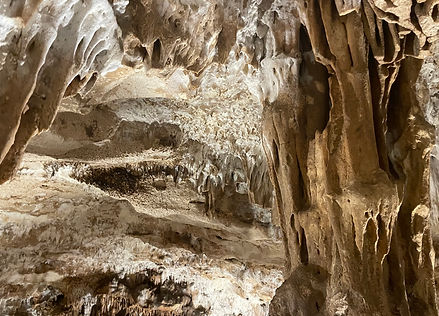
The Curtomartino Cave is located near Acquaviva delle Fonti and it is formed in the calcarenite, covered by a fossil present everywhere in the territory of Puglia: Rubista. This particular type of sedimentary rock was formed millions of years ago thanks to marine sediment deposits which, over time, were compacted until they created the structure that we can see nowadays. The Rubista, infact, testify the ancient presence of sea which once covered the majority of the territory of this region, actually turning the cave into a real natural archive of the local geologic story.


Lots of the columns, situated inside the cave, were created during millions of years thanks to the conjunction of stalactites and stalagmites. These formations were originated by a slow process of the calcium carbonate deposit dissolved in water which filters by the upper rocks. The stalactites go down from the ceiling, instead the stalagmites grow from the pavement upward. When these two structures meet, they create natural columns of extraordinary beauty and prominence. The phenomenon of the calcareous concretion is extremely slow: they estimate that some of these structures grow by only few millimeters per century, making the cave a place which talks about very long times and a natural process almost imperceptible to the human eye.
Unfortunately, because of earthquakes, some stalactites located on the ceiling have been broken. The telluric movements, which have interested this zone during the centuries, have provoked collapses and changes of the inside cave structures, sometimes changing the natural balance of its conformations. Even so, these events have helped modelling further the habitat inside, creating new passages and widening some cavities.

Continuing the exploration, we noticed the presence of numerous graphemes, vertical lines engraved on the walls of which we don’t know why there are always three. The studiouses think that these signs could be connected to primitive forms of communication or to ritual symbols of the daily life of the prehistoric populations. Some theories suggest that they could represent counts, lunar cycles or symbols related to hunting and survival. The absence of certainties makes


these signs more fascinating because they leave space to interpretations and future studies. Beside the presence of lines, there were numerous graphemes appertaining to the prehistory: these were describing drawings, they represented real scenes of haunting or people. These graphemes constitute a precious testimony to the social and cultural life of the communities that lived in the cave. Some graphemes represented Venuses, symbols of prosperity and fertility, which likely held religious or ritual szsignificance. These Venuses represent one of the most widespread elements of European prehistoric art and are often associated with the cult of motherhood and the continuity of the species.
Faunal remains have also been found, which served vital indicators of the life and adaptation methods of the groups that lived inside the cave; furthermore, they revealed which animal species were preyed upon within the cavern. The most significant is the horse, associated with lower levels, but fragments of an extinct

species that lived in dry environments were also recovered. These findings have allowed archaeologists and paleontologists to reconstruct the climate and natural environment of the era, offering precious information of the climatic changes that affected the region.

This indicates that the cave underwent a gradual transition from steppe to grassland. This environmental shift demonstrates how the area was subject to climatic transformations over thousands of years. These variations influenced local flora and fauna, also determining changes in the habits of the populations who used the cave as a shelter or living space. Additionally, the analysis of animal remains allows us to understand the hunting techniques and survival strategies adopted by prehistoric human groups.
In the caves of Puglia, the invertebrate fauna and bats are particularly famous. These animals play a fundamental role in the cave ecosystem, contributing to the biological balance of the underground environment. Bats, in fact, are crucial for insect control and seed dispersal. The presence of these species indicates a relatively pristine environment favorable to biodiversity. Furthermore, other organisms adapted to dark and humid environments, such as cave insects and small crustaceans, may be present.
From an archaeological perspective, Curtomartino Cave represents a site of great importance for the study of Apulian prehistory. Over the years, excavations have brought to light stone tools, worked bone fragments and traces of hearths, testifying the human presence and the use of the cave as a seasonal shelter or a site for daily activities. Studiouses believe the cave was also used as a strategic observation point and a place of refuge during adverse weather conditions.


The cave also features unique morphological characteristics, with tunnels and chambers developing at various depths. While some areas are easily accessible, others are narrower and more difficult to navigate, making exploration a fascinating activity that requires caution and preparation. The variations in temperature and humidity within the cave create a stable microclimate, which favors the preservation of archaeological and paleontological evidence.
Moreover, the cave hosts cultural events, such as living nativity scenes during the Christmas period and musical concerts. Thanks to its unique shape and evocative natural atmosphere, the cave offers natural acoustics that make musical performances particularly engaging. These cultural initiatives help promote the site, bringing the public closer to local historical and natural heritage.
In recent years, protection and enhancement projects have been launched for Curtomartino Cave, with the aim of preserving this important natural and cultural heritage. Conservation is essential to ensure that future generations can continue to study and appreciate it. Guided tours and educational activities organized at the site represent an important opportunity to raise visitor awareness regarding the importance of safeguarding the environment and archaeological heritage.
Curtomartino Cave is not only a site of scientific interest but also a testament to the relationship between man and nature throughout history. Its exploration allows a better understanding of the evolution of the Apulian territory and the transformations that characterized the natural environment and human communities. Visiting this cave means embarking on a journey through time to discover the origins and traditions that helped build the cultural identity of the region.
In conclusion, Curtomartino Cave stands as a site of extraordinary geological, archaeological, and cultural importance. Its natural formations, historical artifacts, and evidence of prehistoric life make it a unique and fascinating place. The enhancement and protection of this heritage are essential to preserve a significant part of the natural and human history of Puglia.


On the cave’s site here below you can find a 360° map of the place that we described
https://www.grottacurtomartino.com/la-grotta/